Posts Tagged ‘garden’

Making Our Own Rotating Barrel Composter

Example barrel composter at class

** NOTE ** In an effort to get this posted quickly, I may not have all the dimensions, products or resources listed as I would like to. I’ll come back and update. I promise!

In trying to be more “green” at home, I finally finished putting our compost barrel together. Of all the recycling-earth friendly things we’ve started to do here, I’m most excited about this, but it probably shouldn’t have taken as long as it did. I started it in March at our local park district. (Embarrassed, yes.) Since I wasn’t able to stay for the whole class (1-1/2 hours), I jsut made sure I had all the pieces that were needed to finish and brought everything home. Of course, there was every intention to get it done on the first nice weekend, but that weekend went by, as did several others… and here we are today.

There have been a few inquiries about how to put it together. I was able to take a few pictures at class, which will hopefully be helpful with the instructions.

Materials needed

Legs

  • (2) Plastic sawhorse brackets (hardware included)
  • 4 pieces of 2×4 at 31″ to 32″ lengths each for legs
  • 2 pieces of 2×4 at 12″ each for pipe surface

Composter

  • (1) Food grade plastic barrel
  • (2) hinges
  • (2) barrel bolts
  • (2) pull handles
  • (1) 1-1/2″ diameter PVC pipe – 60″ length
  • (4) 1-1/4″ EMT/pipe brackets
  • several wire nuts to cap off screws

Equipment

  • Jigsaw
  • Hammer
  • Tape measure/ruler
  • Hole drill bit
  • Power drill (cordless is easier, but not necessary)
  • Drill bits
  • Permanent marker

Making the stands

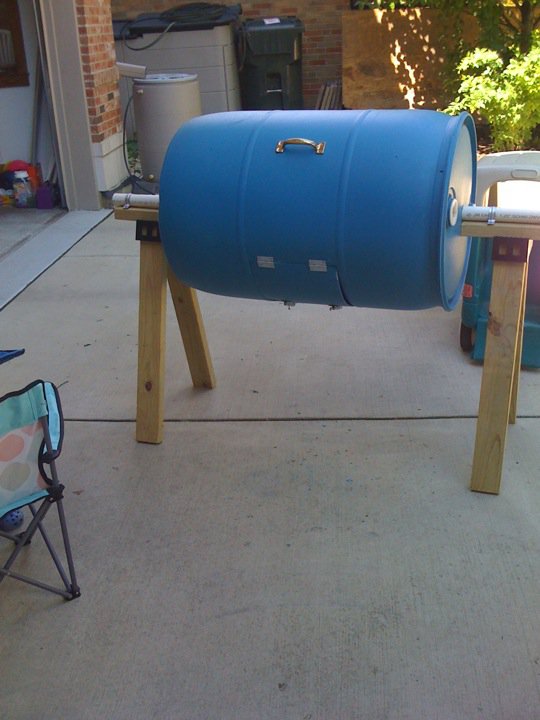
This was essentially like making legs for a sawhorse except I didn’t place a long 2×4 across the legs. Instead I used two small pieces of 2×4. (See the pictures above and below of the finished barrel.)

Find the center of the 12″-2×4 and drill a hole to fit the bracket bolt. Center the sawhorse bracket on hole and hammer it down in place. Take the piece and place it on the sawhorse bracket. Take your assembly and put it on the ground upside down (ready to receive the legs). Insert leg pieces into the bracket/holders, hammer to secure, then place center support piece in the middle and tighten bolt. It may help to have someone steady the legs.

Preparing the barrel

On barrel ends, mark the centers. Drill a hole on both ends large enough for the 60″ PVC pipe.

Cutting the door

The door will be approximately 11″ x 11″. Your barrel may have seams (ribs or lines) that will be helpful for marking. From rib to rib on my barrel, I have 11 inches. I marked a square accordingly.

Before cutting the door, install the hinges and barrel bolts so that the door piece wouldn’t fall in after you cut it. To have the door open up like a trash chute, the barrel bolts are on top and the hinges are on the bottom. Place the pieces in position (no real measurements here) and traces locations and holes. Predrill all your holes with a small bit (5/16″ worked well) – it makes life so much easier!

At this point, take the jigsaw and cut ONLY at the hinge and bolt locations (4 cuts). Make sure your cuts go slightly past the hardware so you have somewhere for the jigsaw to start easily when you cut the rest of the square. Then install the hinges and bolts by hand making sure not to strip the screws (that’s actually me in the picture).

Cut out the rest of the square. After it’s finished, open the door to check if everything is cut correctly.

Install the two pull handles the same way, marking its location and predrilling holes. Basically, the pulls go on opposite sides of the barrel, above and below the door.

Using wire nuts, I cover all the screws on the inside.

Lastly, drill a number of random holes all around the barrel… but not through the door (plenty of air space around there).

Mounting the composter on the stands

Place your PVC pipe through the barrel. That’s the easy part.

It helps to have friends around for placing the barrel, but I was able to have my two kids hold the legs/stands upright and in place, while I maneuvered the barrel holding on to the pull handle.  Once you get the PVC pipe on the legs, take a couple of pipe brackets and secure to the 2×4. I had to angle the screws in a bit. They were slightly long, and would have gone through the 2×4 had I drilled straight down. As it is, you want to angle the screws in, to make sure the brackets are tight against the pipe when you secure it to the wood.

What to Compost

  • Coffee grounds
  • Tea leaves/bags
  • Eggshells
  • Fruit and vegetable scraps (I’ve been told that banana peels, orange peels and peaches have high levels of pesticides, so don’t compost them if you’re going to use your “black gold” to grow food.)
  • Shredded newspaper (for carbon)
  • Leaves, straw, hay, grass clippings

Do Not Compost

  • Deadly weeds
  • Diseased plants
  • Human or pet waste
  • Meat/fish scraps or bones
  • Oily/fatty food products
  • Dairy products
  • Chemically treated wood products

Tags: , , , , , ,

Tutorial: Newspaper Seedling Pots and Cardboard Garden Tray

It was another awesome time at the Chicago Craft Social last Friday night! I’m writing about the event on Craft Critique, so here we’ll just focus on this cool, recycle/upcycle project.

(Update: The event review is posted on Craft Critique now.)

Leading this table was a lot of fun, and I promised some new crafty friends that I would have instructions posted on this very simple eco-friendly outdoorsy project. Though it may be a little late in the season, I might start some vegetable seedlings for late summer/early fall planting. What I love about the pots is that there’s no adhesive, and you can plant the whole thing in the ground once your seedlings are established.

The newspaper seedling pots: newspaper and scissors

I didn’t use any forms or jars to form my pots, but there are certainly products out there that are sold at your local garden shop for not a lot of money. I took full sheets of newspaper and cut them in half, then half again (quarter-pages). Using two quarter sheets, roll them up like toilet paper roll size.

Fold one end of the tub into itself (about 1/4″ to 1/2″) and press. Repeat. Folding over a few times will give the pot some structure, a little collar of sorts.

Now the tricky party: the bottom. I place the tube over my fingers like a puppet and just start folding the bottom into itself, as if I’m wrapping a cylindrical gift.

Eventually, you end up with a triangular little piece of paper, and that can get tucked in. Actually, I smash it onto the table to help get the folds to stay. No adhesives.

This isn’t going to look super neat, but I figure, after you’ve filled the pot with soil, and you’ve started watering your seedling, the paper is going to stick to itself after getting wet.

Now the tray: cardboard, cereal boxes, snack boxes, ruler, cutting mat, rotary cutter or utility knife, bone folder (optional)

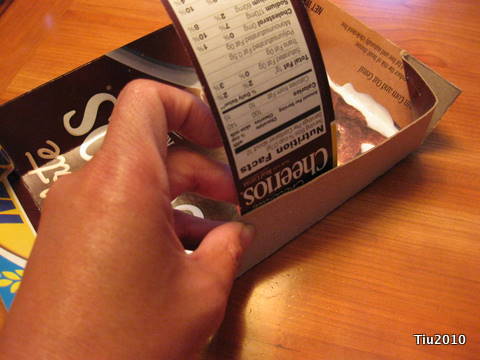
The tray was just something simple for crafters to carry their pots home, but think of the possibilities with kids and a little paint or stickers! You can use any cardboard box, like cereal and snack boxes. One box will make two trays. So, cut apart your box: front, back, two sides.

Take your large rectangular piece and measure 1-1/2″ to 2″ from each side – the width is up to you. Then using a straight edge, make a line from outside corner to “inside” corner. Score (not cut) on these lines.

At this point, you should be able to fold the cardboard and start forming the tray. The diagonal lines can be “pushed” into the tray. This then gets stapled to the tray side (doesn’t matter which side).

Use a box edge to create the handle… just staple onto the tray.

The tray below has a 1-1/2″ edge. The 2″ tray looks is shown at the beginning of this post and here at my friend’s blog, “Our Tiny Oak Park Bungalow“.

***

Looking for more crafting, my review on Xyron’s Creatopia machine is posted at Craft Critique (disclaimer). This machine is amazing! Check out all six articles, and there’s a great giveaway that ends on Saturday, June 26! Good luck!

Tags: , , , , , ,

Gotta Get Outside

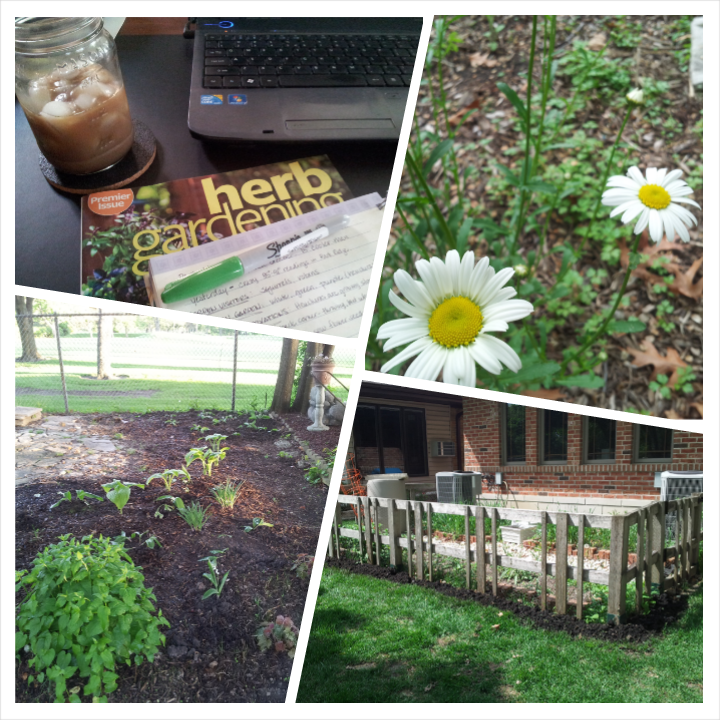
I’ve learned from working in construction that there are really only two seasons in Chicago: coming out of winter and going into winter. Sometimes there is an in-between, and that’s when everyone runs outside. We’ve been spending some time outside in our backyard. I’m so excited the plants are coming up after last year’s late season planting especially the brunella (Jack Frost), the garlic and some ferns that were transplanted from Oak Park to a far west suburb and then to our home. You’ll see the ferns have grown a lot in just a few weeks!

(click on the pictures to zoom in)

The shrubs are looking a little lopsided, hopefully after some pruning and warmer temperatures, they’ll bounce back. I’m slightly worried about them. I planted some lettuce and spinach in “the farm”, but I’m afraid it’s late in the season. They’re sprouting now, as of this post, so we’ll see what happens. Saturday, chicken wire was added to help deter the rabbits. I’m looking to add some marigolds soon…along the perimeter of the kitchen garden.

This week is starting out a little damp and cloudy, but by the weekend, I should have some warmth to do more outside. Right now, I have a leak somewhere in the roof to take care of, too. Grrr!

Tags: , , , , ,

In the Backyard

Over the last few weeks, we’ve been busy in the backyard. Yes, while also preparing for family houseguests and the wedding. Needless to say, our home has been very active over the last month.

We wanted to do something in the southwest corner of our backyard – the shadiest part, too. We called up our friend who also designed our home to help us pull together some ideas. These are the “before” shots.

Southwest corner

Looking west

Not so full garden bed - south elevation before

Here’s where we are now:

Southwest corner

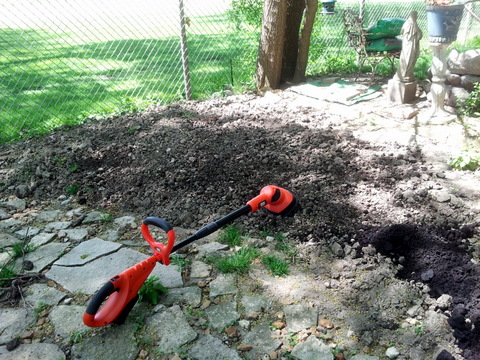
Our poor friends… the clay soil was really tough to work through. They also ran into some leftover construction debris (stones, concrete scraps). I’m so glad they were able to help. Patrick is laying out the patio where most of the flagstone came from “Freecycle”.

Working on the arbor

Pretty arbor – the doorway to the shade garden.

Fenced kitchen garden in progress

Fencing to keep the critters out – have to add the chicken wire.

Fenced kitchen garden

The raised beds are bordered by our leftover brick from original house construction. We have a few more details to complete and then we’ll be done for the season which is a good thing… it was a balmy 30 degrees (or less) overnight. Hopefully the plants will survive since they’ve been in for almost a month now.

Shade Garden Plantings: Henry’s Garnet Sweetspire, Viburnum “Winterthur”, Jack Frost Brunnera, ferns and other steppable plants interspersed within the stone patio.

Tags: , , , , ,

Tales from the outside

One month ago… rose bushes coming out of winter, serviceberry trees and chanticleer pear tree in bloom.

img_1974

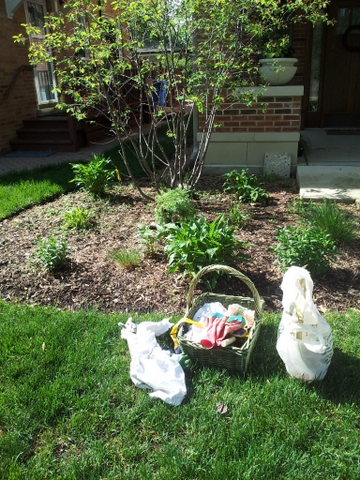
A friend helped us with a trouble spot by transplanting some hostas.

img_1973

Looks like this now…

Transplanted hostasRose bushes gone wild

And what is up with our phlox? One side is great, while the other side is practically dead. I’ve been told that it has to do with water. The full bunch is sort of landlocked and has tons of water. Not so good for the serviceberry, but it’s acclimated, I think.

Phlox in front

And, from the backyard, a flower from our containers…

img_2109

…and a garden project. Amazing what a little patina finish can do on a terra cotta pot. I would write more about the backyard, except that the rabbits have eaten a bunch of the hostas. It looks quite sad.

img_2113

Related Posts with Thumbnails

Tags: , ,